
Dental Associates of Florida logo
  • Pay my bill
  • Patient login
  • Blog
  • Contact
  • Careers
  • Emergencies
  • Locations
    • Prevent
    • Children's Dental Care
    • Dental Exams and Teeth Cleaning
    • General Dentistry Services
    • Restore
    • All-on-4® by Nobel Biocare
    • Dental Fillings, Crowns & Bridges
    • Dental Implants
    • Full and Partial Dentures
    • Implant-Supported Dentures
    • Periodontics
    • Root Canal and Endodontics
    • Improve
    • Cosmetic Dentistry Services
    • Invisalign®
    • Orthodontic Services
    • Porcelain Veneers
    • Teeth Whitening
    • Other Services
    • Emergency Dentist
    • Tooth Extractions
    • Dental payment options
    • Dental insurance
    • Smile Alliance Club
    • Dental financing
    • Special offers
    • Medicare Advantage
    • Good faith estimate
    • About us
    • Patient information
    • Dental reviews
  • Book appointment

Home

Blog

What to Expect With a Tooth Extraction

What to Expect With a Tooth Extraction

November 4, 2021 By Dental Associates of Florida

What to Expect With a Tooth Extraction

Although a visit to the dentist will probably never be on your most-wanted list of things to do, it can be considerably less traumatic if you know what to expect while you're there. The array of noisy and very sharp tools and instruments that surround the dentist's chair can be quite intimidating as can the thought of someone's hands in your mouth for an extended period.

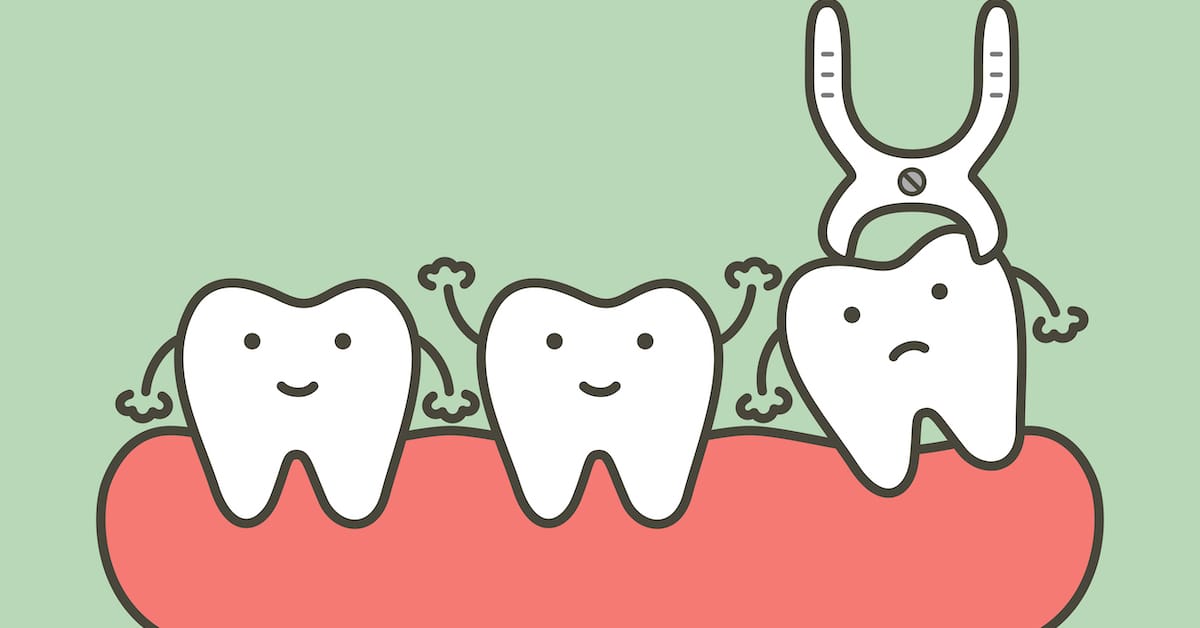
To maintain the best oral hygiene, though, you need to make periodic trips to the dentist and you may occasionally need a procedure such as a tooth extraction. The most common reasons for a tooth extraction are broken, chipped, cracked, or damaged teeth that can't be repaired. The definition of a tooth extraction is the removal of a tooth from its socket in the jawbone. When you need an extraction but you know what to expect, the experience is considerably less daunting.

Your tooth extraction will start with an x-ray so that your dentist knows the best method of extraction to use and can spot any complications that may arise. They'll discuss your medical history and any medications you currently take, including prescriptions and over-the-counter supplements. You need to be open with your dentist about your medical history and conditions so that complications can be avoided. If you develop a cold, an infection, nasal congestion, vomiting, or nausea during the week before your procedure, you should notify your dentist because your procedure may need to be delayed until you're well.

Thinking About Your Tooth Extraction Procedure

Your dentist will want to know specifically about the following medical issues:

  • Bacterial endocarditis now or in the past
  • Congenital heart defect
  • Artificial or damaged heart valves
  • Compromised immune system
  • Cirrhosis of the liver
  • Hip or knee replacement

Types of Tooth Extractions

There are two types of tooth extractions: simple and surgical. A simple extraction involves loosening the tooth and carefully removing it. It's a simple and straightforward procedure. A surgical extraction, however, is more complex and may require intravenous anesthesia. Surgery is used when the tooth hasn't erupted but remains below the gum line. Your dentist will make a small incision in the gum before removing the tooth, and the incision will be closed using self-dissolving stitches. Both types of extractions use local anesthesia, so you shouldn't feel any pain. Pressure is normal, but pain or pinching isn't, so if you feel either pain or pinching, then let your dentist know.

After Your Extraction Procedure

When your extraction is complete, your dentist will suture the site, and then pack it with gauze. You'll be asked to bite down firmly and hold the pressure. This will help staunch the bleeding. When you get home, carefully follow these aftercare guidelines:

  • Rest for the first 24 hours, don't do anything strenuous.
  • Continue biting down for at least three hours, or until the bleeding stops. Change the gauze pad as necessary.
  • Keep your head elevated for 24 hours, even while you sleep.
  • Apply an ice pack at 10-minute intervals to the outside of your jaw where the tooth was extracted. Don't apply ice directly to the site, however.
  • Avoid smoking, rinsing, spitting forcibly, or drinking through a straw for 24 hours because those activities can dislodge your clot.
  • After 24 hours, rinse with a solution of ½ teaspoon salt to eight ounces of warm water.
  • Maintain good oral hygiene but avoid the extraction site.
  • Eat a semi-soft diet with foods such as yogurt, mashed potatoes, soup, and applesauce.
  • Take pain medication as you need it and as directed by your dentist.

Although any dental procedure may elicit a certain amount of discomfort, bleeding, or pain, it shouldn't be excessive. If you experience any of the following, notify your Florida dentist without delay:

  • Chills, fever, signs of infection
  • Chest pain, coughing, shortness of breath
  • Bleeding, swelling, or severe pain after four hours
  • Excessive discharge, redness, swelling
  • Vomiting or nausea

The presence of any of these can indicate a serious health issue, so don't delay in apprising your dentist of them.

You should remain on your semi-solid diet for several days until your site has substantially healed. After that, you can resume your typical diet and lifestyle. Complete healing from a tooth extraction typically takes between one and two weeks.

Wisdom Tooth Extractions

Wisdom teeth are the third and final set of molars to appear. They're located at the far back on both sides of both the upper and lower jaws. Unfortunately, by the time the wisdom teeth appear, there's often not enough room for them, so they need to be extracted. Although many dentists have adopted the practice of preventive dentistry by removing the wisdom teeth as a matter of course, not all dentists agree that this is a recommended procedure.

Many times, the wisdom teeth grow in straight and they don't crowd the surrounding teeth, so removing them seems premature and unnecessary since all extractions carry risks as well as benefits. The American Dental Association recommends extracting wisdom teeth under the following circumstances:

  • Cyst or tumor development
  • Infection
  • Onset of gum disease
  • Damaged adjacent teeth
  • Tooth decay
  • Pain or discomfort

Even if your wisdom teeth aren't currently causing a problem, you should consider preemptive wisdom teeth removal because problems can develop asymptomatically. Dentists are sharply divided on the benefits of preventive wisdom teeth removal, so if you receive an opinion you don't like, you're sure to be able to get a second opinion from a dentist whose views align with yours. The most common reasons for preventive removal of the wisdom teeth include:

  • Safety: Many dentists believe it's prudent to remove the wisdom teeth before problems have the chance to develop.
  • Disease: Since wisdom teeth can be diseased without showing any evidence, removing them eliminates the possibility of future issues.
  • Risks: Since older adults can develop complications before, during, or after an extraction, many dentists recommend removing the wisdom teeth while a person is still young and less inclined to develop complications.

No matter which side you're on, you should be able to locate a Florida dentist who agrees with your views. It's important to locate a dentist whose views are compatible so that you can maintain the best oral health possible while you learn the pros and cons of your procedures.

Recent articles

comprehensive care Comprehensive Dental Care in Florida
Dental Emergency Dental Emergencies in Florida
dental implants can renew your smile Let's Talk Dental Implants

Book your appointment today.

Book appointment
Dental Assocaites of Florida logo
  • Dental Associates of Florida - Bartow
  • Dental Associates of Florida - Brooksville
  • Dental Associates of Florida - Central Brandon
  • Dental Associates of Florida - Haines City
  • Dental Associates of Florida - Lakeland
  • Dental Associates of Florida - Lutz
  • Dental Associates of Florida - Plant City
  • Dental Associates of Florida - Polk Parkway
  • Dental Associates of Florida - Sun City
  • Dental Associates of Florida - Tampa
  • Dental Associates of Florida - Winter Haven
  • Dental Associates of Florida – Cosmetic & Implant Dentistry
  • Walding & Associates (Affiliated Practice)
  • All-on-4® by Nobel Biocare
  • Children's Dental Care
  • Cosmetic Dentistry Services
  • Dental Exams and Teeth Cleaning
  • Dental Fillings, Crowns & Bridges
  • Dental Implants
  • Emergency Dentist
  • Full and Partial Dentures
  • General Dentistry Services
  • Implant-Supported Dentures
  • Invisalign®
  • Orthodontic Services
  • Periodontics
  • Porcelain Veneers
  • Root Canal and Endodontics
  • Teeth Whitening
  • Tooth Extractions
  • Find a dentist near you
  • Privacy policy
  • Notice of Privacy Practices
  • Site map

© 2026 Dental Associates of Florida. All rights reserved. The above-listed practice complies with applicable Federal civil rights laws and does not discriminate on the basis of race, color, national origin, age, disability, or sex. Notice of non‑discrimination.

(863) 658-6631
(352) 436-4768
(813) 336-8118
(863) 232-4372
(813) 489-9539
(813) 559-0020
(813) 867-7649
(813) 413-5921
(863) 576-4558
(813) 413-6923
(863) 450-3353