
Dental Associates of Florida logo
  • Pay my bill
  • Patient login
  • Blog
  • Contact
  • Careers
  • Emergencies
  • Locations
    • Prevent
    • Children's Dental Care
    • Dental Exams and Teeth Cleaning
    • General Dentistry Services
    • Restore
    • All-on-4® by Nobel Biocare
    • Dental Fillings, Crowns & Bridges
    • Dental Implants
    • Full and Partial Dentures
    • Implant-Supported Dentures
    • Periodontics
    • Root Canal and Endodontics
    • Improve
    • Cosmetic Dentistry Services
    • Invisalign®
    • Orthodontic Services
    • Porcelain Veneers
    • Teeth Whitening
    • Other Services
    • Emergency Dentist
    • Tooth Extractions
    • Dental payment options
    • Dental insurance
    • Smile Alliance Club
    • Dental financing
    • Special offers
    • Medicare Advantage
    • Good faith estimate
    • About us
    • Patient information
    • Dental reviews
  • Book appointment

Home

Blog

Why Flossing Is a Must and Not an Optional Activity

Why Flossing Is a Must and Not an Optional Activity

April 26, 2021 By Dental Associates of Florida

Why Flossing Is a Must and Not an Optional Activity

Most of us have been missing something important for quite some time. We've been told that we need to brush our teeth assiduously, which will lead to good oral health. As it turns out, that's not strictly accurate. Although brushing at least twice each day is important, we also need to floss if we're to have the best oral health possible. Some dentists now believe that flossing once is the equivalent of brushing twice. That doesn't mean that you can just floss and then forego brushing. It means that you need to do both. It doesn't matter whether you brush first or floss first as long as you do both.

After you eat or drink, a sticky, bacteria-laden substance called plaque forms on your teeth. When plaque isn't removed through brushing and flossing, it turns into a hard substance that can only be removed by a dentist. Plaque also contributes to the onset of decay, cavities, and gum disease. When plaque remains on the teeth for an extended period, it can cause you to lose your teeth. Amazingly enough, a thin strand of dental floss and a toothbrush can eliminate – or at least forestall – many of these problems.

Not only is flossing good for your oral health, but it can also be good for your physical health. Research has linked gum disease to several major health problems such as diabetes, dementia, heart disease, obesity, and pneumonia. The evidence indicates that it's caused by inflammation which can start as gum disease. So, make sure you floss at least once each day, preferably just before bedtime, to reduce your risk for developing these serious diseases.

Anyone who is in a high-risk category should be particularly dedicated to their oral hygiene regimen. Older people and those who have dry mouths are in this high-risk category, among others. Although you can't change your age, you can talk to your dentist about possible solutions for dry mouth, which can be genetic, age-related, or due to medications. A dry mouth can contribute to poor oral health because saliva is supposed to flush bacteria from the mouth, so if you lack saliva, the bacteria isn't being flushed from your mouth.

Flossing is vital, but you need to floss correctly for it to be effective. Take a length of floss – about 18 inches – and grasp it in the thumbs and index fingers of each hand. For stability, you may want to loop it once or twice around your index fingers. Gently slide the floss between your teeth. Then, using a seesawing motion, move it back and forth, then up and down between your teeth and gum line. Repeat this for all your teeth, using a fresh area of floss for each tooth. It doesn't matter whether you use waxed or unwaxed dental floss or whether you brush first or floss first. Be sure to rinse your mouth well after flossing.

Flossing Is Vitally Important for Kids Too!

Flossing is as essential for kids as it is for adults, so make sure your kids floss as part of their daily hygiene routine. As soon as your child has two teeth that are next to each other, they should start learning to floss. It may be a challenge to teach young children, but the long-term results will be worth it. Fortunately, there are ways to motivate even the youngest child. Children enjoy learning when it's fun and appealing, so the following may help provide a good learning environment for your kids, no matter their ages.

Five Methods to Generate Flossing Motivation for Kids

  1. Chart their success: Make or buy an oral health care chart and hang it in their bathroom at eye level. Add a favorite sticker or a star to each day that they successfully floss and brush their teeth. After several consecutive days, reward them with an extended bedtime, a favorite movie, or some other treat.
  2. Game time: Make floss time game time with lively music, dancing, and storytelling. Use your creativity to make it a fun event.
  3. Tiny tools: Although flossing tools for adults are bulky and boring, flossing tools for kids are small, easy to hold, and come in fun colors. Floss also comes in different flavors, so get the ones that appeal to your young one.
  4. Praise them: Don't overdo it, but praise your kids for their achievements in learning how to floss. It will make them feel good about themselves and build their self-esteem.
  5. Do as I do: It's difficult to stress the importance of flossing when you don't floss, so join the kids in a flossing party and make it a family activity. Provide family rewards too!

Foolproof Flossing in Just Four Easy Steps

Flossing isn't difficult, but it does require some manual dexterity. The American Dental Association has published some guidelines to make it easier to learn.

  1. Wind: Use about 18 inches of floss and grasp it between your thumbs and index fingers, then pull it taut.
  2. Guide: Lead the floss between your teeth with your index fingers and move it in an up-and-down motion and then in a back-and-forth motion.
  3. Glide: Keep moving the floss gently and smoothly between the teeth and the gum line and all over the surfaces of the teeth.
  4. Slide: Use a clean area of floss for each tooth and gently rub the floss over the surface of each tooth, taking care not to damage your tooth enamel or gums. Rinse thoroughly after you've finished flossing.

If you dislike regular dental floss, you can use a hand-held flosser that works the same, except you hold the handle of the flosser rather than the floss. This type of flosser is also available in an electric model.

If you have braces or other orthodontic appliances, be careful not to get your floss tangled in them. Your dentist can provide small flossers and special orthodontic floss that will work in smaller areas. No matter the type of floss you use, take care not to damage anything.

By flossing every day along with your brushing routine, you can optimize your dental hygiene regimen and your dental health. If you have questions about flossing techniques or equipment, call Dental Associates of Florida at , and we'll be happy to help you. Call us today.
Recent articles

comprehensive care Comprehensive Dental Care in Florida
Dental Emergency Dental Emergencies in Florida
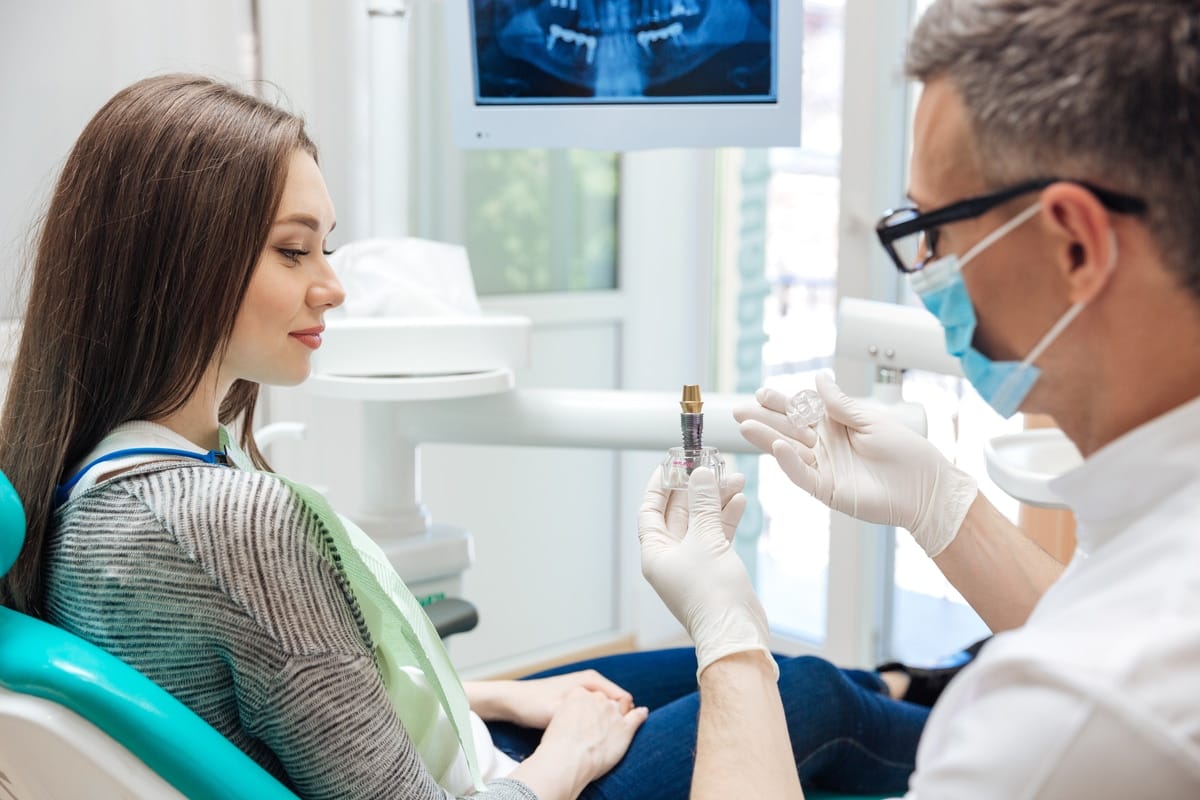
dental implants can renew your smile Let's Talk Dental Implants

Book your appointment today.

Book appointment
Dental Assocaites of Florida logo
  • Dental Associates of Florida - Bartow
  • Dental Associates of Florida - Brooksville
  • Dental Associates of Florida - Central Brandon
  • Dental Associates of Florida - Haines City
  • Dental Associates of Florida - Lakeland
  • Dental Associates of Florida - Lutz
  • Dental Associates of Florida - Plant City
  • Dental Associates of Florida - Polk Parkway
  • Dental Associates of Florida - Sun City
  • Dental Associates of Florida - Tampa
  • Dental Associates of Florida - Winter Haven
  • Dental Associates of Florida – Cosmetic & Implant Dentistry
  • Walding & Associates (Affiliated Practice)
  • All-on-4® by Nobel Biocare
  • Children's Dental Care
  • Cosmetic Dentistry Services
  • Dental Exams and Teeth Cleaning
  • Dental Fillings, Crowns & Bridges
  • Dental Implants
  • Emergency Dentist
  • Full and Partial Dentures
  • General Dentistry Services
  • Implant-Supported Dentures
  • Invisalign®
  • Orthodontic Services
  • Periodontics
  • Porcelain Veneers
  • Root Canal and Endodontics
  • Teeth Whitening
  • Tooth Extractions
  • Find a dentist near you
  • Privacy policy
  • Notice of Privacy Practices
  • Site map

© 2026 Dental Associates of Florida. All rights reserved. The above-listed practice complies with applicable Federal civil rights laws and does not discriminate on the basis of race, color, national origin, age, disability, or sex. Notice of non‑discrimination.

(863) 658-6631
(352) 436-4768
(813) 336-8118
(863) 232-4372
(813) 489-9539
(813) 559-0020
(813) 867-7649
(813) 413-5921
(863) 576-4558
(813) 413-6923
(863) 450-3353